


Bengal Cat General Description
Loved by those who appreciate its inquisitive and loving nature, the Bengal is a medium to large cat renowned for its richly colored, highly contrasted coat of vivid spots or distinctive marbling. Originally developed from crosses between the domestic cats and the Asian Leopard Cat, the Bengal is the only domestic cat that can have rosettes like the markings on Leopards, Jaguars and Ocelots. Today's domestic Bengal cat comes only from breeding Bengals to other Bengals and requires no specialized care. Since their beginnings in 1986, the Bengal's regal beauty and alluring charm have quickly made it one of the most popular breeds. Employing scientific insights and a cooperative spirit, Bengal breeders continue to develop these stunning cats with careful selection for temperament, health and beauty. Bengals participate in TICA shows throughout the world and have a devoted following of happy pet owners who couldn't imagine sharing their lives with anything other than these feline beauties.
Bengal Cat History
Throughout history, there are indications of a profound human fascination with the large and small wild felines that inhabit the jungles and forest of the world. In 1963, Jean S. Mill crossed the domestic cat with the Asian Leopard Cat, a spotted five to twelve pound shy wild cat species from Asia. This was the first effort to use hybrid offspring to create a breed of domestic cat with the loving nature of a favored fireside tabby and the striking look associated with Leopards, Ocelots and Jaguars. The modern Bengal breed traces to cats bred by Mrs. Mill beginning in the early 1980's. The breed's name is a reference to the scientific name of the Asian Leopard Cat, Prionailurus bengalensis. The hybrid crosses are registered as Foundation (F1, F2 & F3) Bengals that are not eligible for show and only the females are used for breeding.
Accepted as a new breed in TICA in 1986, Bengals gained championship status in 1991. They are now one of the most frequently exhibited breeds in TICA. An enthusiastic group of breeders around the world have successfully fulfilled the goal of creating a docile, civilized house cat that wears the richly patterned coat of the jungle cats and has some of the arresting features that have inspired and aroused humanity for centuries.
Bengal Cat Personality
While you can train a Bengal to have "good manners", they are an active, inquisitive cat that loves to be up high. If you don't like a cat to leave the floor, a Bengal is probably not the right cat for you. Bengals are busy by nature. They are very affectionate and can be a "lap cat" whenever THEY want to be, but in general their idea of fun is playing, chasing, climbing and investigating. When a Bengal is in full play mode, it's rather like trying to hold on to running water! They'll often save the cuddle time for when they want to sleep. Many Bengals enjoy water and may join you in brushing your teeth or taking a shower. Some Bengals are vocal while others are more quiet and selective about using their voice.
Bengals will also, in general, ALWAYS want to be where you are. After all, that's where the action is! And Bengals are all about "The Action". When given the choice of a static toy, and one that does wild, unpredictable things, Bengals will always choose the "wild" one! For individuals or families who enjoy rambunctious, funny, beautiful and dynamic feline companionship, consider the Bengal.
Bengal Cat Traits
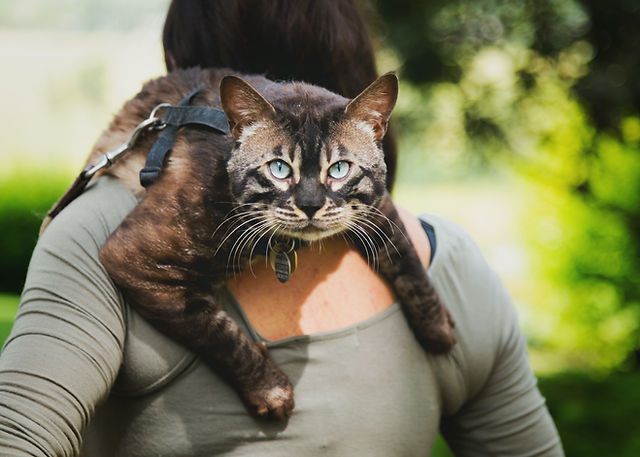
The Bengal is most noted for it luxurious short, soft coat which may appear in either the spotted or marble pattern. Some Bengal's coats feature something called glitter which imparts an iridescent sheen to each hair. The spotted pattern is most associated with the "leopard look" as the coat features clearly discernible spots and rosettes. The Bengal's spots can be large or small and often include rosettes, like the spots of Jaguars and Leopards, which are two- toned spots. Bengals may also be marbled, which is a derivative of the classic or "bull's eye" pattern found in many breeds of cats but with an especially dramatic appearance in Bengals. The marbled Bengal has a swirling pattern that appears as random swirls or thick diagonal and horizontal lines flowing across the coat of the cat.
The most popular colour of the Bengal is the brown/black tabby, a lacklustre description for coats that can be anywhere from a cool grey to vibrant shades of golden, bronze, copper or mahogany with spots or marbling ranging from rich browns to intense black. Bengals also come in a range of colours associated with a form of albinism, called "snow" by breeders, that indicates Siamese and Burmese ancestry. In these colours, the coat appears ivory, cream or light tan with spots or marbling that may range from light brown to dark chocolate, and the eye color is blue to aqua. Silver Bengals have grey to nearly white backgrounds with dark grey to black patterns. Also distinctive about the Bengal's colouring is that they may have nearly white undersides and facial markings that still show the tabby pattern.
Bengal cats are known for their striking coats, which come in a wide range of colors and patterns shaped by genetics and careful breeding. At Brigite’s Bengals, we work with Brown, Snow (Lynx, Mink, and Sepia), Silver, Charcoal, and Melanistic Bengals, each displaying distinct contrast, pattern clarity, and tonal depth. From bold rosettes to marbled coats and high-contrast charcoal masks, Bengal colouring is more than aesthetic—it reflects lineage, structure, and development over time. To explore how these colours and patterns form and what makes each one unique, read our detailed guide on Bengal cat colors and patterns on the blog.
Bengals are medium to large cats, from 6-15 pounds, with males generally being larger than females. A healthy Bengal is well muscled and has an appearance that depicts its athleticism. Bengals are balanced cats and none of its physical features should appear exaggerated or especially pronounced. Please Vist Our Blog Post "Exploring the Vibrant Colour Palette of Bengal Cats and Their Unique Patterns" for a more in depth read!
Bengals are generally confident, curious and devoted companions. They get along well with other pets when properly introduced and enjoy being part of a family. Each Bengal is an individual and those interested should find out as much as they can about this wonderful breed before adding one to their family.

Bengal Cats: Breed Traits, Care, and Ownership FAQs
Are Bengal cats good pets?
Yes, Bengal cats can be excellent pets for the right homes. Bengals are intelligent, social, and highly interactive cats that form strong bonds with their owners. They thrive in environments that provide daily play, enrichment, and routine. Bengal cats are best suited for households that want an engaged, active companion rather than a low-maintenance or independent cat.
Do Bengal cats require more attention than other cat breeds?
Yes. Bengal cats typically require more attention and stimulation than many other domestic cat breeds. They are highly intelligent and energetic, which means they benefit from interactive play, climbing opportunities, and mental enrichment. Without adequate stimulation, Bengals may become bored or overly vocal. Read this blog post about how your Bengal cat is different from other breeds.
Are Bengal cats high-energy cats?
Bengal cats are considered a high-energy breed. They are athletic, agile, and enjoy climbing, jumping, and interactive play. Providing vertical space, scratching posts, and daily play sessions helps meet their physical and mental needs and supports healthy behavior.
Are Bengal cats vocal?
Bengal cats are known for being communicative rather than constantly loud. They often use chirps, trills, and expressive sounds to interact with their owners. Vocalization is usually a sign of engagement, curiosity, or excitement rather than stress or aggression.
Do Bengal cats get along with other pets?
Bengal cats can get along well with other cats and cat-friendly dogs when introductions are handled properly. Early socialization and gradual introductions are important. Because Bengals are confident and energetic, compatibility depends on the temperament of both animals rather than breed alone.
Are Bengal cats hypoallergenic?
No cat breed is completely hypoallergenic, including Bengal cats. However, some people with mild cat allergies report fewer reactions to Bengals due to their short coat and reduced shedding. Allergy sensitivity varies by individual, and spending time with the breed before adoption is recommended.
Are Bengal cats legal in Canada?
Yes, Bengal cats are legal to own in Canada. Reputable Bengal breeders ensure their cats are fully domestic and several generations removed from their wild ancestors. Ownership laws can vary internationally, but Bengals from established breeders meet Canadian domestic cat regulations. We wrote a Blog post about why some breads are getting banned in certain countries and what that means for Bengals as a bread. Read it here.
How much exercise do Bengal cats need?
Bengal cats need daily exercise and mental stimulation to stay balanced and healthy. Interactive play sessions, climbing structures, puzzle toys, and enrichment activities help meet their needs. A well-stimulated Bengal is typically calmer and more content indoors. We like to take ours out on walks. We harness-train our kittens. Read how here.
How long do Bengal cats live?
With proper care, nutrition, and veterinary support, Bengal cats commonly live between 12 and 16 years, with many living longer. Genetics, diet quality, activity level, and preventive care all influence lifespan.
Are Bengal cats destructive?
Bengal cats are not naturally destructive, but they are curious and intelligent. Without appropriate outlets, they may climb, explore, or investigate household items. Providing scratching posts, climbing structures, and enrichment prevents unwanted behavior and supports natural instincts.
How do I choose a reputable Bengal breeder in Calgary or anywhere?
A reputable Bengal breeder in Canada should be registered with a recognized cat association like TICA, prioritize health and temperament, raise kittens in-home, and provide clear contracts and guidance. Ethical breeders focus on long-term well-being, not volume or quick placement.
Is a Bengal cat the right breed for me?
A Bengal cat is ideal for individuals or families who want an interactive, intelligent, and engaging companion. Bengals thrive in homes that value routine, enrichment, and active involvement. They are not typically suited for owners seeking a low-energy or hands-off pet.