


A Practical Guide to Feline Nutrition & Feeding
Feline nutrition plays a critical role in a cat’s long-term health, digestion, hydration, and behaviour. Because cats are obligate carnivores, their dietary needs differ significantly from those of dogs and humans.
This guide explains how to think about feline nutrition in the real world, from protein and moisture requirements to feeding routines, environment, and common dietary pitfalls, so cat owners can make informed, health-focused feeding decisions.
Why Nutrition Matters for Every Cat
While energy levels and activity can vary by breed, all cats share the same core nutritional needs:
-
High animal protein (cats are obligate carnivores)
-
Moisture-rich food (cats naturally drink very little water)
-
Clear ingredient sourcing
-
Consistent feeding routines to support digestion and behaviour
High-energy or athletic cats, like Bengals, may show dietary imbalances more quickly, but the nutritional foundations remain the same for all breeds.
-
High animal protein (they’re obligate carnivores)
-
Moisture-rich food (they’re not big water drinkers)
-
Clear ingredient lists (no mystery “meat by-products” and fillers)
-
Consistent feeding routine (blood sugar and behaviour stay balanced)
When food is fresh, species-appropriate, and consistent, cats simply do better. Beyond the information on this page, we've linked to posts where we've covered expanded information. If you're looking for some quick tips on simple diet changes that will improve your cat's eating habits, check this post out!
Feline Nutritional Resource Hub
This hub brings together foundational feline nutrition guidance, from feeding approaches and meal balance to routines and breed-specific considerations. Each section below explores one core element of how cats eat, digest, and regulate energy—so you can make informed, practical feeding decisions at every stage.
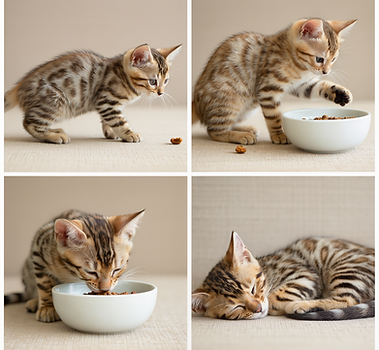

Feeding Approaches: Fresh, Cooked, Raw & Commercial
There is no single “perfect” way to feed every cat. This section outlines the most common feeding approaches, commercial, fresh, cooked, and raw, so cat owners can understand where each fits, what to watch for, and how to choose an approach that aligns with their cat’s needs and their household.


Portions, Routines & Feeding Behavior
Nutrition isn’t just about what’s in the bowl—it’s about timing, portions, environment, and routine. This section covers feeding frequency, portion guidance, behavioural cues, and how structured routines support digestion, energy regulation, and long-term well-being.
Visit Our Blog for New FelineNutritional and Behavioural Insights


Nutritional Consultancy
We offer personalized nutritional guidance to support each cat’s health, behaviour, and lifestyle needs. Our approach focuses on evaluating current diets, feeding routines, and ingredient quality, then providing practical recommendations grounded in feline physiology and real-world experience. Rather than prescribing rigid plans, we work collaboratively with owners to refine feeding strategies that support hydration, digestion, energy regulation, and long-term well-being—particularly for high-energy breeds like Bengals. This consultative approach helps families make informed, confident decisions around nutrition at every stage. Our guidance is educational and experience-based, designed to support informed feeding decisions, not to replace veterinary care.


Nutrition Questions We’re Asked Every Week
“How do I start introducing homemade food to my cat?”
Start slowly. Any diet change should be introduced over 7–10 days by gradually mixing the new food with the current diet. Sudden changes can cause digestive upset. Portion ratios and timing matter, especially for cats with sensitive stomachs or existing health conditions. If you are just looking to transition your cat's diet in general, check out this Blog Post on transitioning Your Cat's Diet.
“What supplements does my cat actually need?”
At a minimum, homemade diets require taurine and a calcium source to remain balanced. Many recipes also include omega-3 fatty acids and specific vitamins, depending on the ingredients used. Supplement needs vary by recipe, which is why careful formulation matters.
“How do I prevent urinary or digestive issues?”
Moisture intake and meal structure play a major role. Diets that prioritize hydration, consistent feeding times, and appropriate fiber levels tend to support urinary and digestive health better than dry-only feeding. Always consult a veterinarian if symptoms persist.
“Do different cat breeds need different diets?”
All cats share the same core nutritional requirements. However, highly active or athletic cats may benefit from more frequent meals and careful attention to protein quality and hydration. The fundamentals of feline nutrition remain consistent across breeds.
"Is cooked food safer than raw food for cats?"
Cooked diets reduce exposure to foodborne pathogens when prepared properly. Both cooked and raw homemade diets require precise formulation to avoid nutritional imbalances. Food safety practices and supplementation are critical regardless of feeding style.
"Can cats eat homemade food every day?"
Yes, cats can eat homemade food daily if meals are nutritionally complete, properly supplemented, and consistently prepared. Homemade feeding requires more planning than commercial diets to avoid deficiencies.
"What nutrients are cats most commonly deficient in?"
Common deficiencies include taurine, calcium, and certain vitamins when diets are improperly balanced or recipes are followed without supplementation.
"Is homemade cat food better than commercial food?"
Neither is universally “better.” The quality of ingredients, nutrient balance, and consistency matter more than the format itself.
Ready to Feed Your Cat Better?
If this guide explains the why behind feline nutrition, our shop resources focus on the how — with structured guides designed to help cat owners apply these principles at home. Educational guides include Feed the Cat…Better and a Quick Start transition guide for cat owners new to homemade feeding.
👉 Explore Nutrition Guides & Recipes